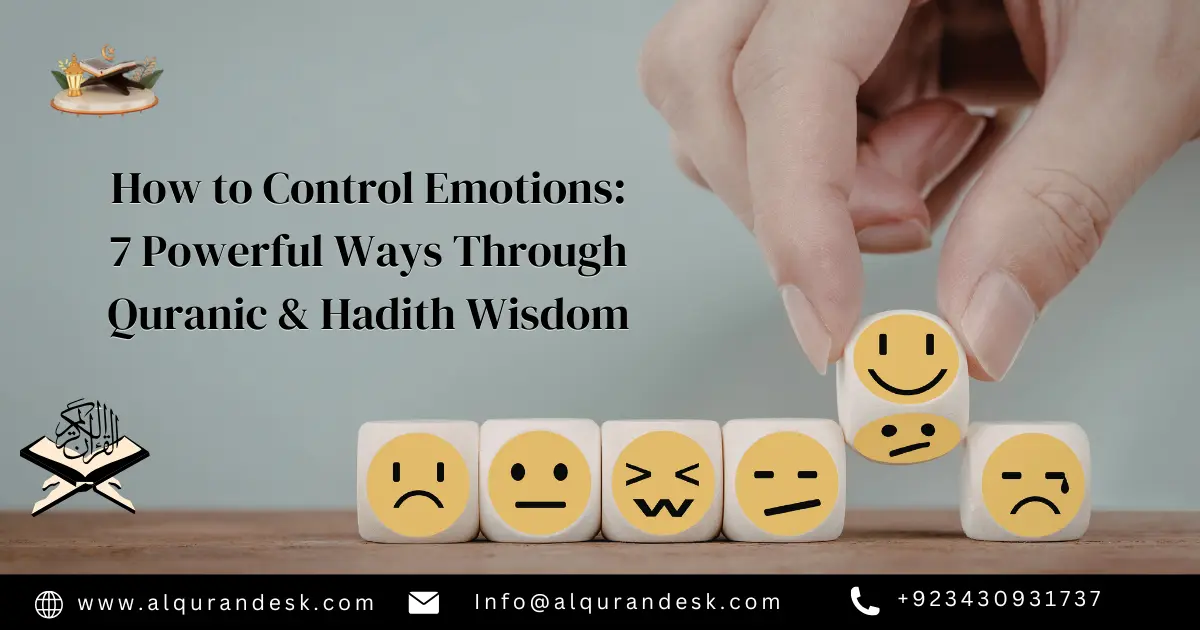
How to Control Emotions: 7 Powerful Ways Through Quranic & Hadith Wisdom
Introduction
Learn about 7 effective emotions management strategies of the Quran and Hadith that can be used to overcome anger, anxiety, grief, jealousy and despair. This guide is a blend of spiritual knowledge, actions, and strong duas to enhance patience (Sabr) and trusting Allah (Tawakkul) to live in a balanced life in the contemporary world.
Anger, anxiety, grief, jealousy, and despair are human emotions that are normal conditions in life. In the present, rapidly changing and emotional world, it becomes harder than ever to manage emotions. Emotional management is one of the most demanding issues for people in the modern world, which is full of stress, hectic schedules and computers. Mental peace, relationships and faith are influenced by anxiety, anger, jealousy, grief, and despair. However, Islam offers a full emotional guidance system in the form of the Quran and the Hadith and timeless wisdom, which is highly relevant even in the era of AI.
The Quran does not disregard human feelings; on the contrary, it recognises, directs and polishes them. The concept of emotional intelligence within the Islamic faith is based on sabr (patience), tawakkul (trust in Allah), and taqwa (God-consciousness).To ensure the balance of emotions and inner peace, Islam has the full emotional system of guidance, the Hadith of Prophet Muhammad Salla Llahu Alayhi WaSallam, which includes practical and eternal methods of religion.
Whoever keeps his anger and forgives men– God is pleased with the performers.
(Surah Aal-e-Imran 3:134)
The following are 7 effective Quranic and Hadithic means of controlling the emotions and leading a peaceful, well-balanced life with Allqurandesk online.
1. Anger Control by being patient (Sabr)
Anger is among the worst emotions that are destructive in their course. The Quran glorifies those who can restrain anger because they do not suppress their emotions, but control them with prudence.
Prophet Muhammad {Salla Llahu Alayhi WaSallam} said:
The powerful individual is not the one who can overwhelm others but the one who restrains himself when he is angry.
(Bukhari & Muslim)
Practical Steps:
Pause before reacting
Make wudu when angry
Sit or lie down if standing
Take shelter in Allah against Shaytan.
Controlling anger is not a sign of weakness- it is a sign of spiritual power.
2. Solve Fear With Tawakkul (Trust in Allah)
Fear of the future and loss of control are very often the sources of anxiety. The Quran constantly reminds the believers that Allah is the master, not the situations.
And he who trusts Allah, Allah is adequate to him.
(Surah At-Talaq 65:3)
All anxiety is slowly discarded when the heart depends on Allah.
Quranic Mindset:
Do your best effort
Leave results to Allah
It is important to remember that the plan of Allah is always more prudent.
Tawakkul is a stabiliser of the person.
3. Cure Grief With Hope in the Quran
The loss of someone one loves is a normal human feeling, and Islam does not refute this. Prophet Yaqub (AS) lamented over his son Yusuf (AS), but he sought Allah.
I complain of my suffering and grief to Allah only.
(Surah Yusuf 12:86)
The Quran teaches us to cope with grief without being faithless.
Healing Through Faith:
Express pain in dua
Remember Allah’s mercy
Know that loss is temporary
The Muslim religion turns sorrow into spiritual intimacy with Allah.
4. Cured Jealousy through Thanksgiving (Shukr)
Jealousy (hasad) kills the peace of the heart and the faith. According to the Quran, Christians are supposed to concentrate on the blessings that they have and not on the lives of others.
Wish not that by which Allah has made the favour of some over others.
(Surah An-Nisa 4:32)
Gratitude changes the emotional emphasis from what is lacking to what is there.
Practice Gratitude:
Count daily blessings
Thank Allah verbally
Avoid comparison
An appreciative heart is emotionally sheltered.
5. Defeat Despair with Divine Mercy
Life tests every soul. The Quran says sabr (patience) is not a weakness- it is a strength.
Allah says:
And We will test thee Surely… But bring glad tidings to the patient.
(Surah Al-Baqarah 2:155)
The Prophet {Silla Llahu Alayhi WaSallam} said:
No better and more comprehensive gift has been bestowed upon anyone than patience.
(Bukhari & Muslim)
How it transforms life:
Patience is useful in controlling loss, suffering, anger and disappointment without losing faith.
Quranic Assurance:
Hardship is temporary
Mercy is guaranteed
Repentance is always open
In Islam, hope is a religious duty.
6. Understand Emotions With Quran Meaning
Understanding of the Quran (tafseer) would enable believers to mature emotionally. The Quran not only tell how to suffer trials but also why they occur.
And we shall definitely put you to the test of something of fear and hunger…
(Surah Al-Baqarah 2:155)
Trials are no punishment, it is Godly training.
Development of Emotions by using the Quran:
Builds sabr (patience)
Strengthens tawakkul
Develops resilience
7. The interpretation of the Quran transforms emotions
Control of Emotions by way of Salah, Dua, and Dhikr.
Worship is a kind of emotional therapy for the soul daily.
Verily, in the remembrance of Allah rest hearts.
(Surah Ar-Ra’d 13:28)
Salah soothes the mind, dua lifts off the emotional weight, and dhikr cleanses the heart.
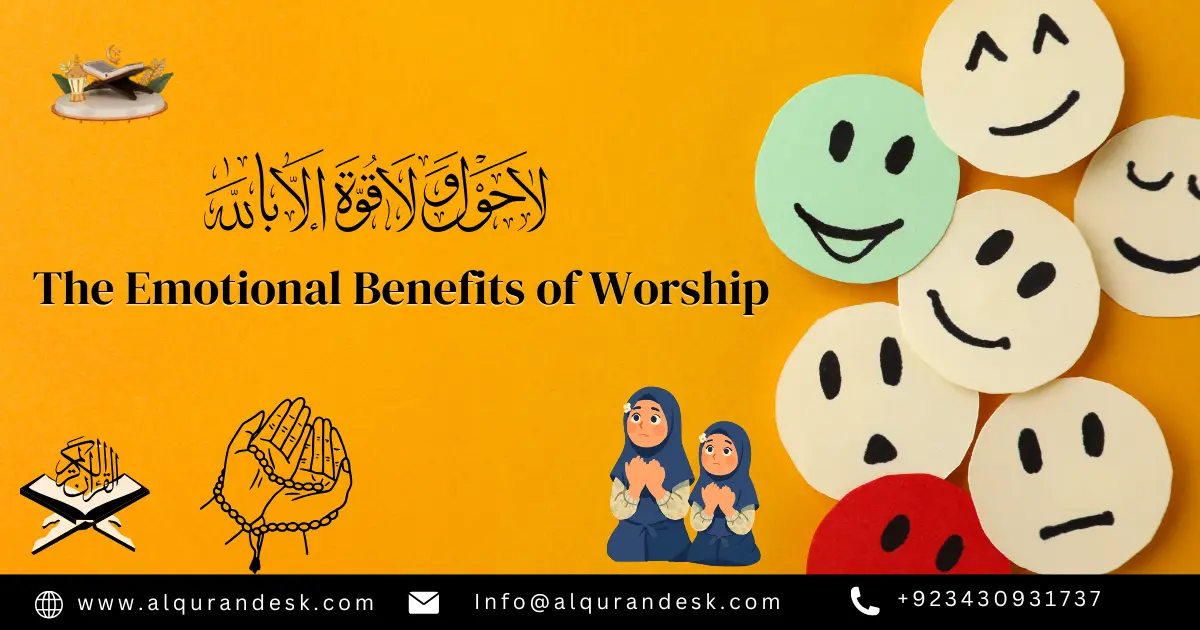
The Emotional Benefits of Worship:
Reduces stress
Improves focus
Brings emotional balance
A heart that is attached to Allah is safe emotionally.
Suffering Troubles through Quranic Power.
According to Islam, every difficulty has a purpose.
And true enough, Strife adds ease.
(Surah Ash-Sharh 94:6)
Suffering Troubles through Quranic Power
Anger is among the most devastating feelings once they rule an individual. The Prophet {Silla Llahu Alayhi WaSallam} has properly redefined force:
It is not the one who conquers the other with a lot of strength, but the one who can control himself in an angry situation, who is the strong person.
(Bukhari & Muslim)
This piece of Hadith instructs to have strength of emotions through mastering self, rather than dominance.
Practical Sunnah Guidance:
Stay silent when angry
Move physically (sit or lie down)
Perform wudu
Take sanctuary in Allah against Shaytan.
Anger management helps to safeguard relationships and faith.
Reducing Anxiety with the Help of Allah
Quran Time Daily: Learn Quran Online Worldwide with AlQuranDesk to help stay consistent despite a hectic, technology-oriented life.
Limit Non-beneficial Screen Time: It is best to use the time spent mindlessly scrolling for studying the Quran, dhikr, or online courses about Islam.
Ethical Online Presence: Be patient, honest and compassionate to those you interact with in the online environment as taught in the Quran.
Educate the Kids Young: Noorani Qaida helps kids to make an equal balance between the use of technology and the study of the Quran.
and Online Hifz Classes.
Should you turn to Allah in the real sense of the word, He would grant you sustenance just as He grants to the birds.
(Tirmidhi)
The Hadith educates people to work and leave the outcome to Allah.
Emotional Impact:
Reduces fear of the future
Builds emotional security
Brings peace of heart
Tawakkul changes anxiety to self-confidence.
Patience and Hope to Heal Grief
In Islam, grief is recognised, but not the sense of despair. In the case of the death of Ibrahim, the son of the Prophet, the Prophet said:
The eyes weep, and the heart is sick; but we say only what shall please our Lord.
(Bukhari)
This Hadith demonstrates the way of dealing with grief without failing in faith.
Lessons from the Sunnah:
Crying is not a weakness
It is acceptable to complain to Allah.
To complain against Allah is not.
Grief is a way of spiritual uplifting.
To be Jealousy-free: Compare and Desire Not.
The passion of jealousy kills the inner peace and fraternity. The Prophet {Silla Llahu Alayhi WaSallam} cautioned:
Also, beware of being jealous because jealousy burns good actions just like fire burns wood.
(Abu Dawood)
The Islamic faith preaches emotional happiness in the form of gratitude and humility.
Emotional Discipline:
Focus on your own blessings
Pray on behalf of others and do not be jealous of them.
The remembrance of Allah is impeccable.
Emotional stability is achieved through contentment.
Despair, put Hope in the Mercy of Allah.
Hopelessness is a spiritual illness and weeps out the soul. The Prophet {Silla Llahu Alayhi WaSallam) was reminding the believer about the mercy of Allah all the time.
Allah is more merciful to his servants than a mother to her child.
(Bukhari & Muslim)
This Hadith brings hope even at the saddest times.
Emotional Healing:
The mercy of Allah is no less a sin.
No failure is final
The penance is never rejected.
A hope is a source of emotional survival.
Silence and Wisdom Controlling the Emotions.
Angry talk always brings about remorse. Prophet leads to emotional discipline by speaking with restraint, which was encouraged by the Prophet {Silla Llahu Alayhi WaSallam}.
Whoever believes in Allah and the Last Day ought to speak good or no speech.
(Bukhari & Muslim)
When one is silent at the time of emotional intensity, it is a defensive Sunnah.
Benefits:
Prevents emotional damage
Eschews conflict unnecessarily.
Encourages reflection
Silence is a form of wisdom.
Control the Emotions with the help of Dua and Remembrance
The Prophet {Silla Llahu Alayhi WaSallam) was known to resort to dua whilst he was troubled emotionally.
O Allah, I take refuge in You against fear and depression.
(Bukhari)
Dua is emotional discharge and spiritual healing.
Sunnah Practices:
Morning and evening adhkar
Duas regularly to be emotionally strong.
Dhikr for inner peace
Allah is a stabilising factor in emotions.
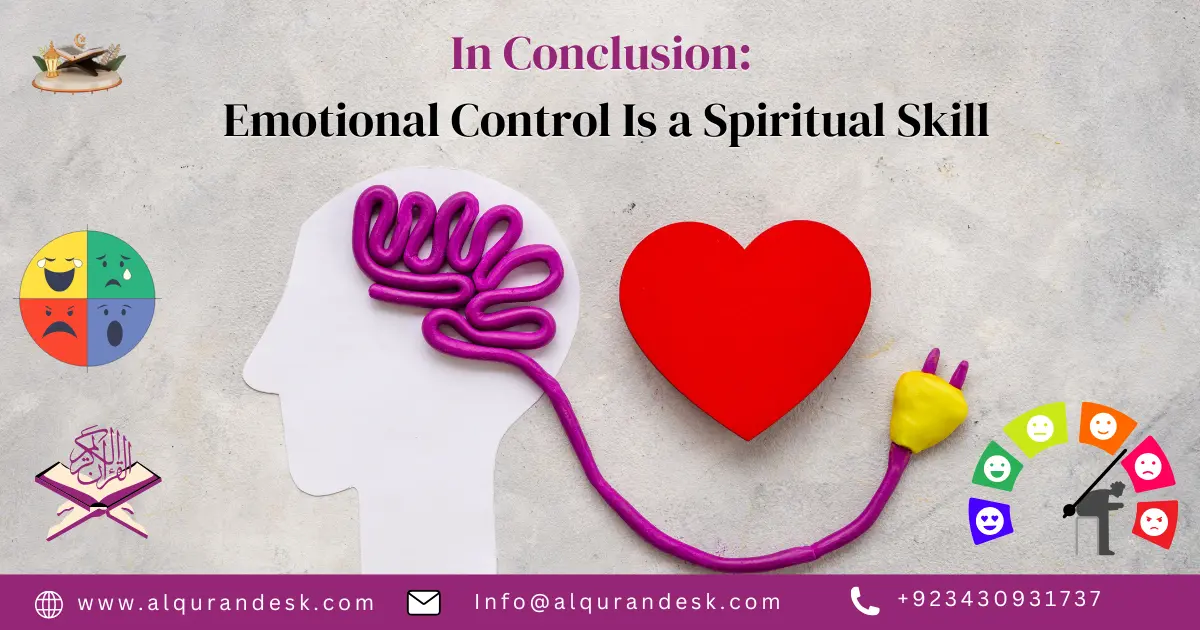
In Conclusion: Emotional Control Is a Spiritual Skill
The Quran and Hadith teach a full-fledged emotional control system, dealing with nervousness, sorrow, rage, jealousy and hopelessness. Quranic wisdom is unchanging emotional intelligence in a world that is dominated by technology and emotional overloads. The Hadith of Prophet Muhammad {Salla Llahu Alayhi WaSallam} offer practical emotional guidelines of anger, anxiety, grief, jealousy and despair control techniques. This does not mean that emotional intelligence in Islam is suppressed, but rather, a discipline in a guided faith.
By living with the Quran:
Emotions become balanced
Hearts become peaceful
Faith becomes stronger
Emotional control is not the ability to suppress but the submission to Allah with comprehension, patience and hope.
According to Prophetic wisdom:
Emotions become balanced
Hearts become calm
Lives become purposeful
Real emotional power is to live the Sunnah and be aware and sincere.
FAQs: Control Your Emotions based on the Hadith Wisdom
What does Islam teach about emotional control?
Emotional control as taught in Islam by the Quran and the Hadith involves forbearance (sabr), faith in Allah (tawakkul), forgiveness, and speechfulness. The Prophet indicated that self-restraint, more so when one is angry, is true strength.
What is the say of the Hadith on the control of anger?
The Prophet Muhammad {Silla Llahu Alayhi WaSallam} said that the most powerful person is the one who restrains themselves when angry. He recommended sensible measures like keeping silence, switching position and seeking sanctuary with Allah against Shaytan.
Is it possible to use Hadith to overcome anxiety and stress?
Yes. Hadith focus on the power of Allah, remembering (dhikr) and praying (du’a) as effective means of alleviating anxiety and stress and calming the heart.
What is the Islamic approach to grief and sadness?
The Islamic faith permits the expression of emotions, but discourages desperation. Prophet {Silla Llahu Alayhi WaSallam} accepted the feeling of grief, but he believed in the wisdom of Allah, thus teaching the people that they should use the grief as a way of praying and waiting.
How can the Islamic answer to jealousy be found?
The Hadith discourages jealousy, because it annihilates good actions. Islam promotes appreciation, satisfaction, and concentration on the blessings of Allah instead of being in comparison with others.
Quick Summary
Emotion management aims at being patient, having faith in Allah, conscious behaviour, and disciplined spirituality. Applying Prophetic wisdom in everyday life, Muslims will have the opportunity to deal with anger, anxiety, grief, and despair and keep their emotions under control in the contemporary world.
Dua for protection:
“حَسْبِيَ اللَّهُ لَا إِلَٰهَ إِلَّا هُوَ عَلَيْهِ تَوَكَّلْتُ وَهُوَ رَبُّ الْعَرْشِ الْعَظِيمِ”
Hasbiyallahu la ilaha illa Huwa, ‘alayhi tawakkaltu, wa Huwa Rabbul ‘Arshil ‘Azim.
“Allah is sufficient for me; there is no god except Him. I place my trust in Him.”
May Allah {Jalla Jalaluhu} have made the Quran the light in our hearts and the direction in our lives. Ameen.
Authentic References
Quran References
-
Quran 3:134
-
Quran 2:155
-
Quran 7:126
-
Quran 2:250
-
Quran 13:28
Hadith References
-
Sahih al-Bukhari 6114
-
Sahih Muslim 2609
-
Sahih al-Bukhari 5649
-
Sahih Muslim 2708
-
Sahih al-Bukhari 6371
-
Sahih Muslim 2723
-
Sahih Muslim 2587
-
Sahih al-Bukhari 6116
Connect with a Quran Teacher
Start learning Holy Quran immediately by connecting with a teacher, right now!
We would love to here from you